
Veterans & First Responders Program
We connect veterans, law enforcement officers, firefighters, and paramedics with specialized addiction treatment programs that understand the unique psychological demands of service. Peer-supported, trauma-informed, and built for those who have served.
Understanding the Unique Challenges of Service
Military veterans, law enforcement officers, firefighters, paramedics, and other first responders face extraordinary psychological and physical demands in the line of duty. Repeated exposure to life-threatening situations, traumatic injuries, and human suffering can leave lasting wounds that manifest as post-traumatic stress disorder (PTSD), anxiety, depression, and substance use disorders.
For many in these professions, asking for help carries a powerful stigma. The culture of strength, self-reliance, and duty can make it incredibly difficult to admit vulnerability. Our Veterans & First Responders program creates a peer-supported environment where participants understand one another's experiences without explanation -- building the trust needed for genuine healing.
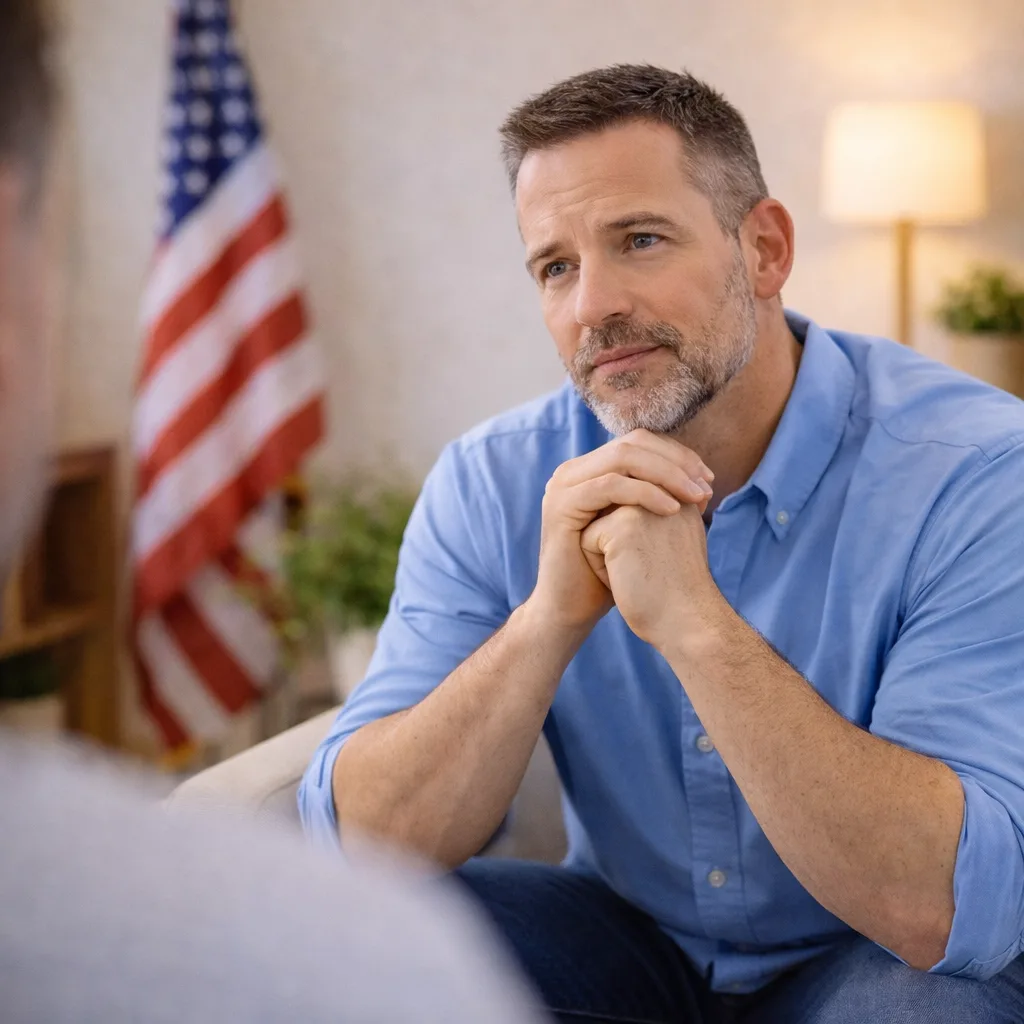

Conditions We Treat in Service Members
Our program addresses the interconnected challenges that veterans and first responders commonly face. We understand that substance use rarely exists in isolation -- it is often intertwined with trauma, chronic pain, and the psychological toll of service.
Evidence-Based Therapies for Veterans & First Responders
Our specialized treatment integrates multiple evidence-based therapies specifically adapted for military and first responder populations.
EMDR Therapy
Process and resolve traumatic memories through guided eye movement desensitization, proven effective for combat and duty-related PTSD.
Learn About EMDRCognitive Behavioral Therapy (CBT)
Restructure negative thought patterns from service experiences and develop healthier coping strategies for civilian life.
Learn About CBTPeer Support Groups
Connect with fellow veterans and first responders in structured group sessions where shared experiences build trust and accountability.
Learn About Group TherapyTrauma-Focused Protocols Built for Those Who Served
For service members, substance use and trauma are usually tangled together. The programs we connect you with treat both at the same time, using the integrated, evidence-based protocols the VA itself recommends.
COPE: Trauma and Addiction Together
Concurrent Treatment of PTSD and Substance Use pairs prolonged exposure with proven addiction therapy, so you heal the trauma driving the substance use instead of chasing one problem at a time.
Prolonged Exposure (PE)
At your own pace, you safely face the memories and situations you have been avoiding, so they slowly lose their grip and stop running your life from the background.
Cognitive Processing Therapy (CPT)
CPT works through the stuck points, self-blame, and moral injury tied to what you saw or had to do, replacing them with beliefs that let you move forward.
Seeking Safety
A present-focused approach that builds stability and coping skills first. You strengthen your footing before any deeper trauma work, never the other way around.
Medication-Assisted Treatment
When it helps, non-addictive medications can ease cravings, steady your sleep, and calm the hyperarousal that service-related trauma leaves behind, all managed by medical professionals.
Care for the Whole Picture
Many who served also carry chronic pain, traumatic brain injury, or military sexual trauma. The centers we match you with treat these alongside addiction, not as an afterthought.
Asking for Help Takes a Different Kind of Courage
The same training that makes you dependable in a crisis can make it hard to raise your hand when the crisis is your own. In military and first responder culture, needing help is too often read as weakness. It is not. Reaching out is one of the strongest things you can do, and we make it as safe and straightforward as possible.
Common Questions About Our Veterans Program
Get answers to the most frequently asked questions about our specialized treatment for veterans and first responders.