
Mental Health Treatment Programs
At IOP Delray Beach, we specialize in integrated dual diagnosis treatment for individuals living with co-occurring mental health and substance use disorders. Our clinical team addresses the whole person — not just the addiction — because lasting recovery requires healing the mind, body, and spirit together.
Understanding Co-Occurring Disorders
According to the Substance Abuse and Mental Health Services Administration (SAMHSA), nearly 9 million Americans experience both a mental health disorder and a substance use disorder simultaneously. When these conditions coexist, they are called co-occurring disorders or dual diagnosis. Each condition often intensifies the other, creating a cycle that is nearly impossible to break without integrated, specialized treatment.
At IOP Delray Beach, we connect you with treatment centers that reject the outdated approach of treating mental health and addiction separately. The integrated treatment model used at these centers addresses both conditions at the same time, in the same setting, by the same clinical team. This approach has been shown by research to produce significantly better outcomes than treating each disorder independently, leading to lower relapse rates, improved mental health stability, and a stronger foundation for lifelong recovery.
Whether you are struggling with depression that led to substance abuse, or anxiety that worsened after years of self-medicating, we'll match you with a team that has the expertise to untangle the complex relationship between your mental health and addiction and develop a treatment plan that addresses the root causes of both.

Not sure which program is right for you?
Take our free 2-minute treatment quiz and get matched with the ideal program for your needs.
Take the Treatment QuizMental Health Conditions Treated in Our Network
The clinical teams at the treatment centers we work with have deep expertise treating a wide range of mental health disorders alongside substance use. Every treatment plan is individualized to your unique diagnosis and needs.
Anxiety Disorders
Generalized anxiety disorder (GAD), social anxiety, panic disorder, and phobias. We address chronic worry, physical tension, avoidance behaviors, and the impulse to self-medicate with substances through evidence-based therapies and holistic practices.
Depression
Major depressive disorder, persistent depressive disorder (dysthymia), and treatment-resistant depression. We help clients overcome persistent sadness, hopelessness, loss of interest, and the devastating connection between depression and substance abuse.
PTSD
Post-traumatic stress disorder resulting from combat, assault, accidents, childhood abuse, or other traumatic experiences. Our trauma-informed therapies including EMDR and exposure therapy help process traumatic memories and reduce hypervigilance, flashbacks, and nightmares.
Bipolar Disorder
Bipolar I, Bipolar II, and cyclothymic disorder. Our psychiatrist provides medication management while therapists help clients recognize mood episode triggers, develop stabilization strategies, and address the high rate of substance misuse associated with bipolar conditions.
ADHD
Attention-deficit/hyperactivity disorder in adults, including inattentive, hyperactive-impulsive, and combined presentations. We address the strong link between ADHD and substance use, helping clients develop focus strategies, organizational skills, and healthy coping mechanisms.
OCD
Obsessive-compulsive disorder characterized by intrusive, unwanted thoughts and repetitive behaviors. We use Exposure and Response Prevention (ERP) alongside CBT to help clients break free from obsessive thought cycles and compulsive rituals that often co-occur with substance use.
Eating Disorders
Anorexia nervosa, bulimia nervosa, and binge eating disorder. There is a significant overlap between eating disorders and addiction, as both involve compulsive behaviors and distorted self-perception. Our integrated approach addresses disordered eating patterns alongside substance use recovery.
Schizophrenia
Schizophrenia spectrum disorders characterized by hallucinations, delusions, and disorganized thinking. Our psychiatric team provides careful medication management and supportive therapies to stabilize symptoms while simultaneously addressing substance use patterns common in this population.
Interdisciplinary Treatment Approach
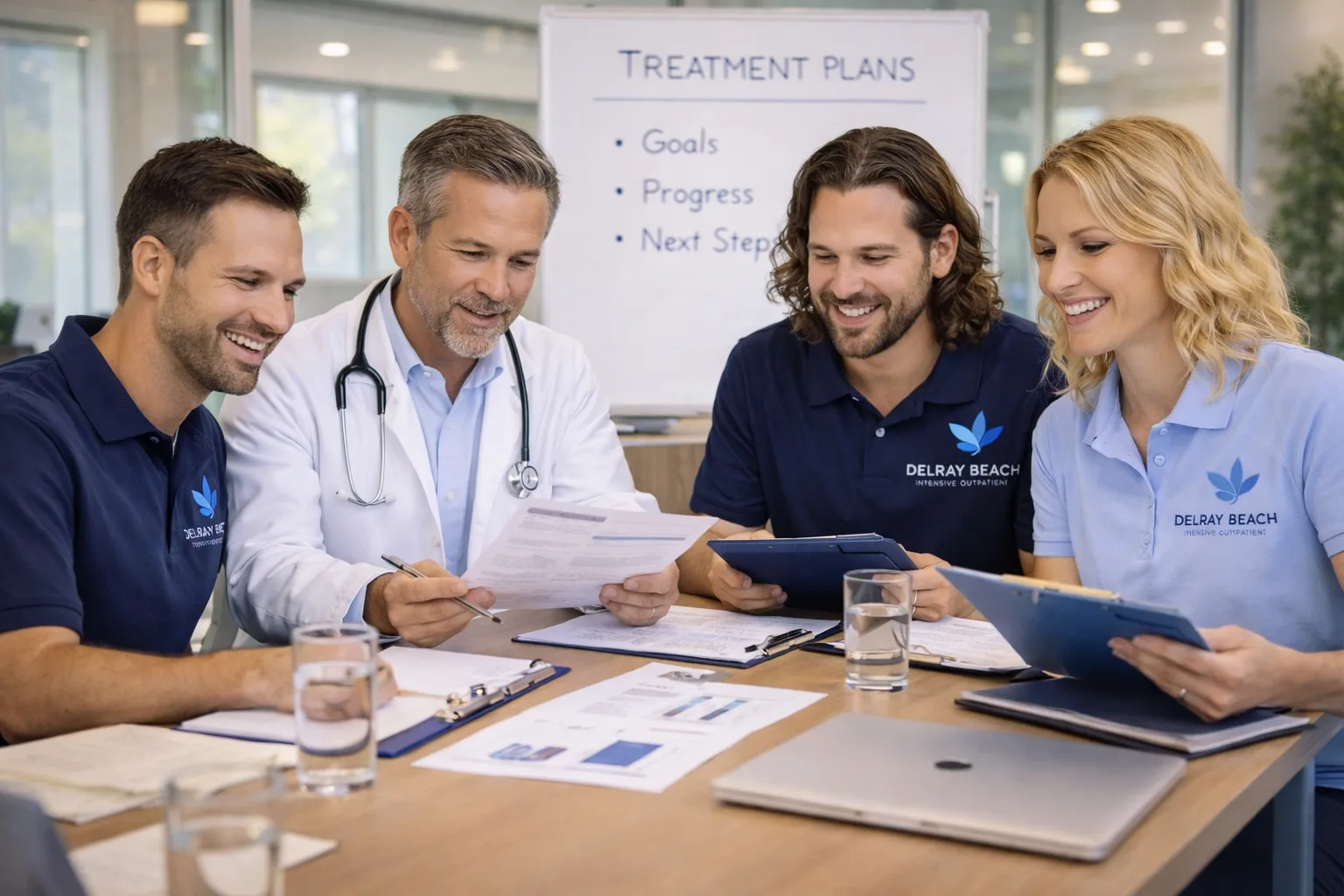
At IOP Delray Beach, mental health treatment is delivered by a highly trained, interdisciplinary team of professionals who collaborate to create a comprehensive, individualized treatment plan for every client. Our team approach ensures that no aspect of your care falls through the cracks.
Medication Management: Our psychiatrist works closely with each client to evaluate the need for psychotropic medications, carefully titrate dosages, monitor side effects, and adjust treatment plans as recovery progresses. Medication is always used as part of a comprehensive treatment plan — never as a standalone solution.
Therapy Methods for Mental Health Recovery
Our integrated mental health program uses multiple therapeutic modalities to address the complex interplay between mental health disorders and substance use.
Individual Therapy
One-on-one sessions with a licensed therapist provide a safe, confidential space to explore the underlying beliefs, unresolved anxiety, past trauma, and family-of-origin issues that contribute to both mental health struggles and substance use. Your therapist tailors each session to your unique therapeutic goals and uses evidence-based techniques to help you develop healthier thought patterns and coping strategies.
Group Therapy
Facilitated group sessions offer powerful peer support and the opportunity to practice interpersonal communication skills in a structured setting. Groups focus on topics such as relapse prevention, emotional regulation, coping with triggers, and building healthy relationships. The shared experience of recovery reduces isolation and helps clients realize they are not alone in their journey.
Family Therapy
Addiction and mental illness affect the entire family system. Our family therapy sessions educate loved ones about addiction as a chronic brain disease, help resolve unhealthy communication patterns and codependent dynamics, rebuild trust that was broken during active addiction, and create a supportive home environment that reinforces recovery rather than enabling relapse.
Evidence-Based Therapeutic Techniques
Our clinicians use rigorously researched, evidence-based techniques proven to deliver lasting results for individuals with co-occurring mental health and substance use disorders.
Cognitive Behavioral Therapy (CBT)
CBT is the gold standard for treating a wide range of mental health disorders and addiction. This structured, goal-oriented approach helps clients identify and challenge distorted thinking patterns that lead to destructive behaviors and emotional distress.
At IOP Delray Beach, our CBT programming incorporates a variety of techniques tailored to each client's needs:
Dialectical Behavior Therapy (DBT)
DBT was originally developed by Dr. Marsha Linehan to treat borderline personality disorder, but it has proven highly effective for individuals with co-occurring disorders, emotional dysregulation, self-harm behaviors, and chronic suicidal ideation.
DBT balances two seemingly opposite goals: self-acceptance (learning to accept yourself as you are right now) and change (committing to altering unhealthy patterns that no longer serve you). Our DBT programming focuses on four core skill areas:
Mental Health Program FAQs
Find answers to common questions about our dual diagnosis and mental health treatment programs in Delray Beach.
Evidence-Based Treatment Approaches for Mental Health
The mental health programs we connect you with integrate multiple evidence-based therapies to address co-occurring disorders and promote lasting recovery.
Cognitive Behavioral Therapy (CBT)
Restructure negative thought patterns and develop healthier coping strategies for lasting behavioral change.
Learn About CBTDialectical Behavior Therapy (DBT)
Build emotional regulation, distress tolerance, and interpersonal effectiveness skills for balanced recovery.
Learn About DBTEMDR Therapy
Process and resolve traumatic memories that drive substance use through guided eye movement desensitization.
Learn About EMDRGroup Therapy
Connect with peers in recovery through structured group sessions that build support networks and accountability.
Learn About Group TherapyFamily Therapy
Heal family dynamics and rebuild trust through evidence-based family systems therapy and communication training.
Learn About Family TherapyHolistic Therapy
Complement clinical treatment with yoga, meditation, art therapy, and other mind-body healing practices.
Learn About Holistic TherapyAddictions We Connect You With Treatment For
Mental health treatment is most effective when it addresses co-occurring substance use disorders. We connect you with integrated treatment for these addictions.